Ingredient analysis
What CeraVe Moisturising Cream actually does
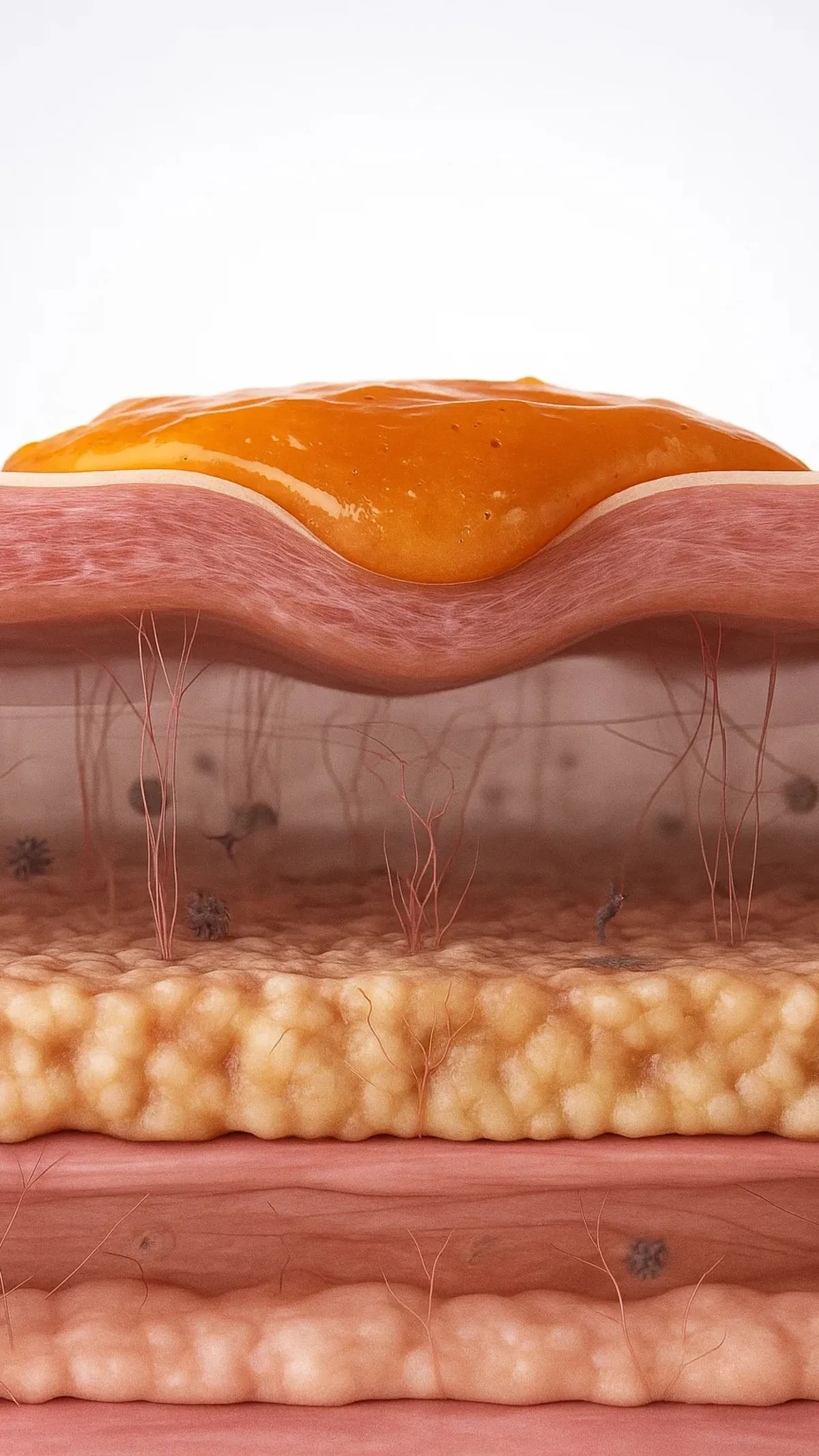
The short answer
It reduces water loss with petrolatum and dimethicone, holds water with glycerin, and supplies three ceramides plus cholesterol and phytosphingosine. That combination is a reasonable approximation of physiological barrier lipids. The delivery-system claim on the packaging is the one part the ingredient list cannot verify.
Barrier repair is an unglamorous claim, and this is an unglamorous formula. Those two facts are related, and both are to the product’s credit.
What is the formula built out of?
Three jobs, done by three groups of ingredients.
Occlusion comes from petrolatum and dimethicone — they sit on the surface and slow water leaving through it. Humectancy comes from glycerin, high on the list, and sodium hyaluronate lower down. Lipid replacement comes from ceramides NP, AP and EOP, cholesterol, and phytosphingosine.
The rest is structure: fatty alcohols and emulsifiers to hold an oil-in-water cream together, two phosphate salts to buffer pH, a chelator, and a preservative system.
Why does the ceramide-plus-cholesterol combination matter?
Because the stratum corneum’s lipid matrix is not made of ceramides alone. It is ceramides, cholesterol and free fatty acids in roughly equimolar proportion, and work on barrier recovery has repeatedly found that incomplete mixtures can recover more slowly than complete ones.
This formula supplies ceramides and cholesterol, and phytosphingosine as a sphingoid precursor. Whether the ratio approximates the physiological one is not something the ingredient list can answer, because no concentrations are published. What can be said is that the formula is built along the right architecture rather than adding a token ceramide for the label.
Which claim does not survive the ingredient list?
The delivery-system claim. The packaging describes technology that releases moisturising ingredients over twenty-four hours.
Nothing in the INCI list identifies a controlled-release carrier, no release kinetics are published, and no concentration figures exist to evaluate. This is not a claim we can call false — it is a claim a buyer has no way to check, which is a different and more common problem.
Who should skip it?
Anyone whose skin is oily and acne-prone. The occlusive load that makes this cream good for a damaged barrier is the same load that makes it heavy on skin that is not missing lipids in the first place.
Common questions
- Do the ceramides in this cream actually reach the skin barrier?
- Topically applied ceramides can incorporate into the stratum corneum, and formulations combining ceramides with cholesterol and a fatty acid perform better than ceramides alone. Concentrations are not published, so how much is present cannot be established from the label.
- Is petrolatum bad for skin?
- No. Cosmetic-grade petrolatum is one of the best-characterised occlusives available, reducing transepidermal water loss substantially, and it is non-comedogenic in the refined form used in cosmetics. Its reputation is a marketing artefact rather than a dermatological one.
- Is this cream suitable for the face?
- For dry or barrier-compromised facial skin, generally yes. It is heavy, and on oily or acne-prone skin the occlusive load can feel like too much — the lighter lotion in the same range is usually the better fit there.
Sources
- CeraVe Moisturizing Cream product page (ingredient list) — CeraVe (L'Oréal) Accessed 15 September 2026.
This is general information about cosmetic formulation, not medical advice. It does not replace a consultation for your own skin.